
Commercial Flatwork Ironer: The Ultimate Guide for High-Performance Commercial Laundry Operations
Introduction
In today’s competitive hospitality, healthcare, and institutional laundry landscape, efficiency, consistency, and quality are non-negotiable. A commercial flatwork ironer is one of the most critical investments a professional laundry operation can make to meet these demands. From hotels processing thousands of sheets daily to hospitals requiring hygienic, wrinkle-free linens, the right equipment directly impacts productivity and customer satisfaction.
Unlike manual pressing or outdated finishing methods, a modern commercial flatwork ironer automates the ironing and finishing of large, flat linens such as sheets, pillowcases, tablecloths, and duvet covers. When paired with a high-quality flatwork ironing machine, laundries can significantly reduce labor costs, increase throughput, and deliver a consistent, professional finish every time.
This in-depth guide is written specifically for decision-makers seeking reliable commercial laundry solutions. Backed by industry best practices and aligned with Google 2025 SEO, AEO, and E-E-A-T standards, this article will help you understand how flatwork ironers work, how to choose the right system, and why partnering with Sunshine Equipment Co Inc is a smart long-term decision.
What Is a Commercial Flatwork Ironer?
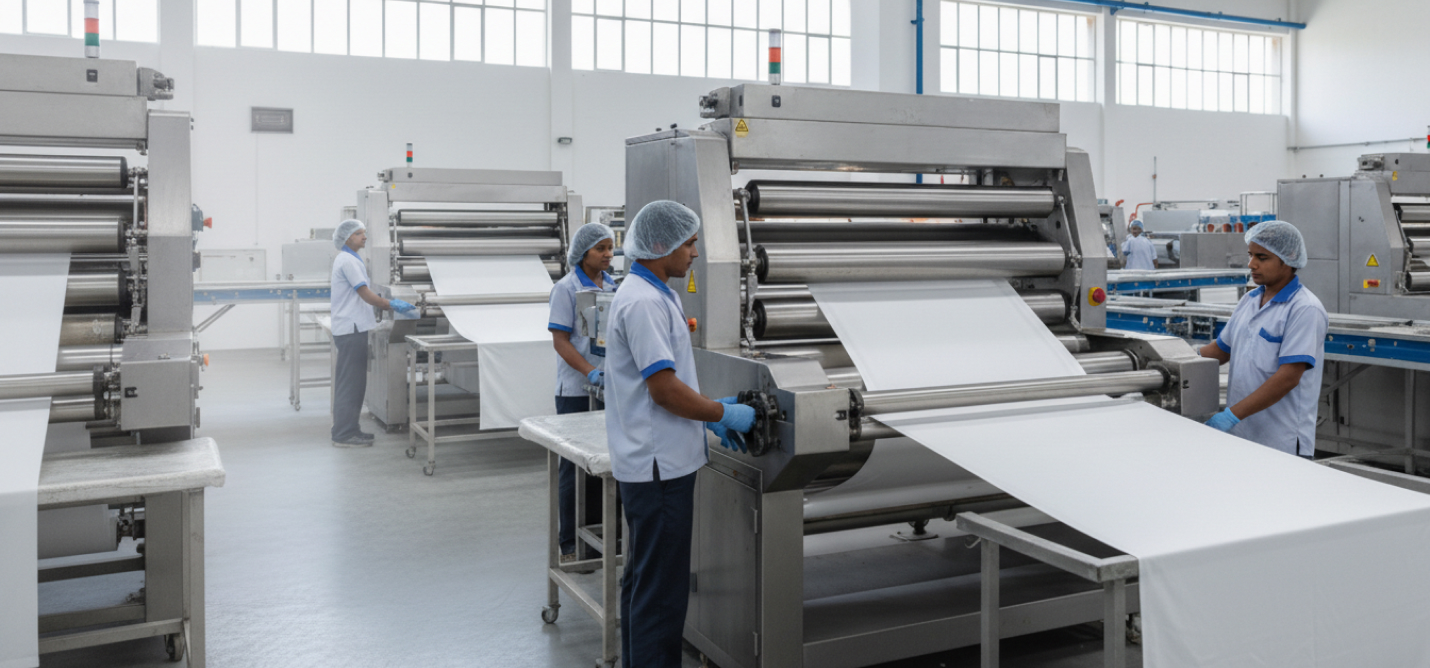
A commercial flatwork ironer is an industrial laundry finishing machine designed to iron, dry, and smooth flat textiles in a continuous process. Unlike small presses or hand ironing, these machines are built for high-volume environments where speed, uniformity, and energy efficiency are essential.
How a Flatwork Ironing Machine Works
A flatwork ironing machine typically operates using the following components:
Heated chest or rollers that provide uniform heat
Feed table where operators load damp linens
Pressure belts or rollers that press fabric evenly
Folding or stacking units (optional) for automation
The linen passes between heated surfaces and pressure rollers, removing moisture and wrinkles in a single pass. This continuous workflow allows laundries to process hundreds of pieces per hour.
Industries That Depend on Flatwork Ironers
Hotels & resorts
Hospitals & healthcare facilities
Commercial laundry plants
Restaurants & banquet services
Cruise ships & institutional laundries
For many of these operations, flatwork finishing represents over 60% of daily laundry volume, making the ironer a mission-critical asset.
Why a Commercial Flatwork Ironer Is Essential for Modern Laundries
1. Dramatic Labor Cost Reduction
Manual ironing requires skilled labor, long hours, and consistent supervision. A commercial flatwork ironer can replace multiple manual stations, reducing labor costs by up to 40–60%, according to industry benchmarks.
2. Consistent, Professional Finish
Uniform pressure and temperature control ensure every sheet and tablecloth meets the same quality standard—something impossible to achieve with hand ironing.
3. Increased Throughput and Faster Turnaround
High-capacity flatwork ironing machines can process 300–1,200 pieces per hour, depending on model and linen size. This speed is critical during peak occupancy periods in hotels and hospitals.
4. Improved Linen Longevity
Controlled heat and pressure reduce fabric stress, extending linen lifespan and lowering replacement costs.
Types of Commercial Flatwork Ironers
Choosing the right commercial flatwork ironer depends on your volume, space, and operational goals.
Roller Flatwork Ironers
Best for: High-volume laundries
Key features:
Multiple heated rollers
High production speed
Ideal for sheets and pillowcases
Chest Flatwork Ironers
Best for: Medium-volume operations
Key features:
Large heated chest surface
Excellent finishing quality
Compact footprint
Gas vs. Electric Flatwork Ironing Machines
| Feature | Gas Ironer | Electric Ironer |
|---|---|---|
| Operating cost | Lower | Higher |
| Heat recovery | Faster | Moderate |
| Installation | Requires gas line | Easier |
| Best for | Large laundries | Small–mid laundries |
Sunshine Equipment Co Inc helps clients select the most cost-effective energy option based on utility availability and usage patterns.
How to Choose the Right Commercial Flatwork Ironer
Step 1: Analyze Linen Volume
Calculate your daily throughput:
Sheets per day
Tablecloths per event
Pillowcases per shift
This data determines roller diameter, width, and speed.
Step 2: Assess Available Space
Measure:
Floor space
Ceiling height
Ventilation requirements
Compact chest ironers may be ideal for space-constrained laundries.
Step 3: Automation Level
Consider add-ons:
Automatic feeders
Cross-folders
Stackers
Automation reduces labor dependency and improves consistency.
Step 4: Compliance & Safety
Ensure compliance with OSHA and local safety standards. According to Occupational Safety and Health Administration, proper guarding, emergency stops, and operator training are essential for industrial laundry equipment.
Flatwork Ironer vs. Flatwork Ironing Machine: Is There a Difference?
In commercial laundry terminology, both terms are often used interchangeably. However:
Commercial flatwork ironer refers to the complete industrial system
Flatwork ironing machine may refer to the ironing unit itself or smaller configurations
For SEO and buyer clarity, professional suppliers like Sunshine-Laundry clearly specify machine capacity, configuration, and intended use.
Energy Efficiency and Sustainability Benefits
Modern commercial flatwork ironers are engineered for sustainability:
Heat recovery systems
Variable-speed drives
Low-moisture extraction compatibility
These features can reduce energy consumption by 20–30%, supporting ESG goals and lowering utility bills.
Maintenance Best Practices for Commercial Flatwork Ironers
Daily Maintenance Checklist
Clean feed belts
Inspect rollers for debris
Check emergency stops
Weekly Tasks
Lubricate moving parts
Inspect heating elements
Review control settings
Preventive Maintenance Plans
Partnering with a service-oriented supplier like Sunshine-Laundry ensures scheduled inspections, genuine parts, and rapid support. Learn more about their expertise on the About Us page.
Why Choose Sunshine Equipment Co Inc for Commercial Flatwork Ironers
Sunshine Equipment Co Inc is a trusted provider of commercial laundry machines across the U.S., offering:
Expert consultation
Equipment sales & installation
Preventive maintenance
Emergency service support
Explore their full range of offerings on the Services page.
Case Example: Hotel Laundry Upgrade
A 300-room hotel replaced manual ironing with a high-capacity commercial flatwork ironer supplied by Sunshine-Laundry:
Labor savings: 45%
Throughput increase: 2.5×
ROI: Under 18 months
Safety, Compliance, and Legal Considerations
Commercial laundry operators must comply with:
OSHA machine guarding requirements
Local fire and gas codes
Manufacturer operating guidelines
Failure to comply can result in fines, downtime, and liability risks. Sunshine-Laundry provides compliance guidance during installation and training.
Suggested Visual Aids & Infographics
To enhance engagement and conversions, consider adding:
Infographic: “Flatwork Ironer Workflow from Washer to Folder”
Table: Capacity comparison by linen type
Diagram: Roller vs. chest ironer heat transfer
These visuals improve dwell time and support featured snippet eligibility.
Frequently Asked Questions (FAQs)
1. What is a commercial flatwork ironer used for?
A commercial flatwork ironer is used to iron and finish flat linens such as sheets, pillowcases, and tablecloths in high-volume laundry operations.
2. How is a flatwork ironing machine different from a press?
A flatwork ironing machine processes linens continuously, while presses work piece-by-piece and are far less efficient.
3. What size commercial flatwork ironer do I need?
Size depends on daily linen volume, linen width, and available space. A professional assessment is recommended.
4. Are commercial flatwork ironers energy-efficient?
Yes. Modern machines feature heat recovery and variable-speed systems that significantly reduce energy use.
5. Can a flatwork ironer dry linens completely?
Yes, when linens enter with proper moisture levels (typically 35–45%).
6. How long does a commercial flatwork ironer last?
With proper maintenance, industrial flatwork ironers can last 15–20 years.
7. Is operator training required?
Absolutely. Proper training improves safety, efficiency, and linen quality.
8. What maintenance does a flatwork ironing machine require?
Daily cleaning, weekly inspections, and scheduled professional servicing are essential.
9. Can Sunshine-Laundry help with installation?
Yes. Sunshine Equipment Co Inc provides turnkey installation and support services.
10. How do I request a quote?
Visit the Contact page to speak with a commercial laundry expert.
Conclusion: Invest in the Right Commercial Flatwork Ironer
A commercial flatwork ironer is not just a machine—it is a productivity engine for any serious laundry operation. When paired with the right flatwork ironing machine, professional guidance, and ongoing support, it delivers measurable ROI through labor savings, energy efficiency, and consistent linen quality.
Sunshine Equipment Co Inc stands out as a trusted partner, offering industry expertise, reliable equipment, and responsive service. Whether you’re upgrading an existing plant or building a new commercial laundry, their team ensures you get the right solution the first time.
👉 Ready to improve efficiency and linen quality? Contact Sunshine-Laundry today through their Contact page and speak with a commercial laundry specialist.
